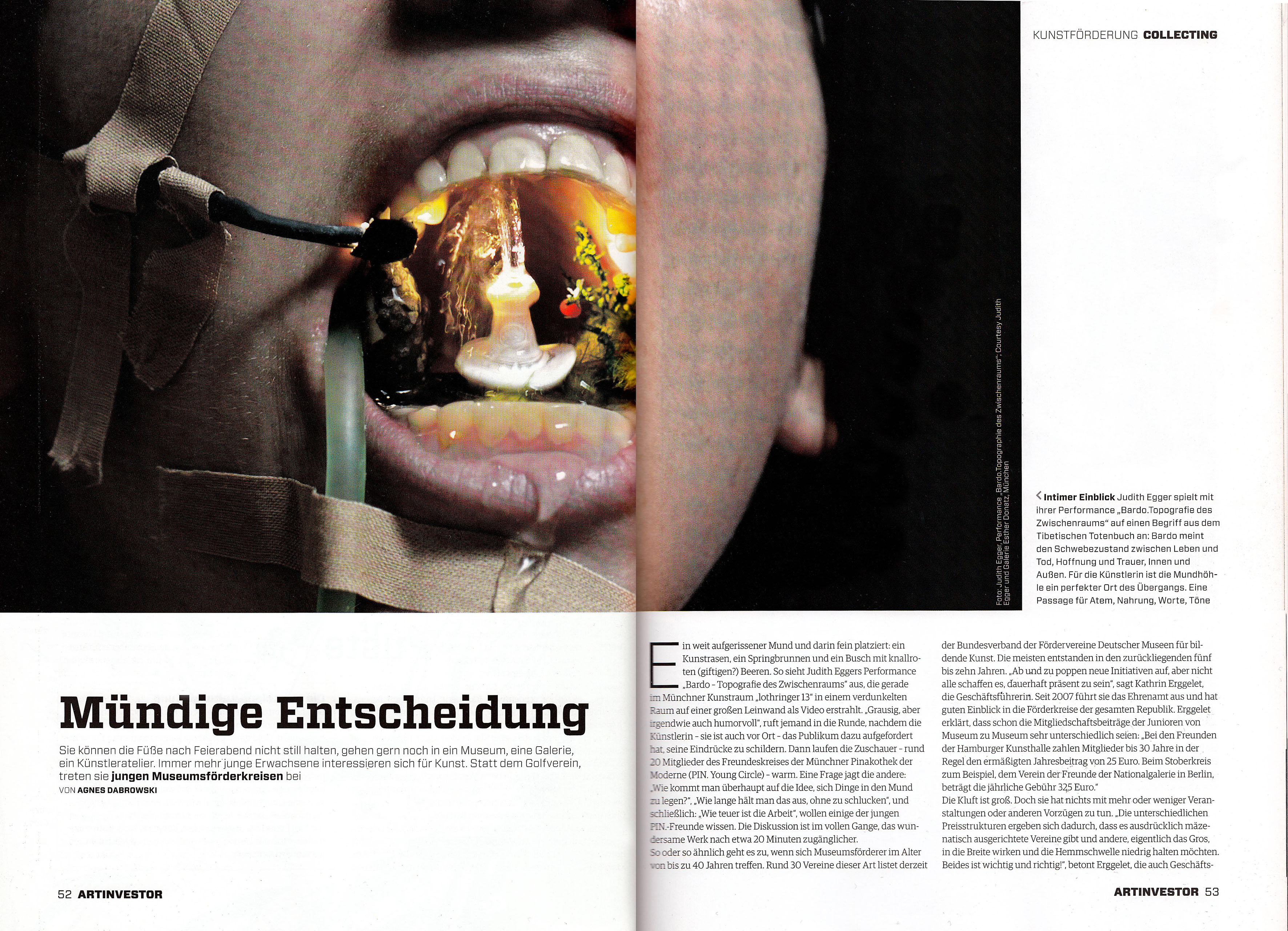
Musical theatre is theatre conceived from music. The elements used can be detached from any purely musical expectations of a visual, performative or textual nature. The composition of the individual elements and their development follow a musical logic: a logic that is fed by the musician's intuition, training and experience. When a visual artist like Judith Egger wants to use the most primitive of all musical resonance chambers, namely the human oral cavity, as a stage space, then this is musical theatre in its purest form.


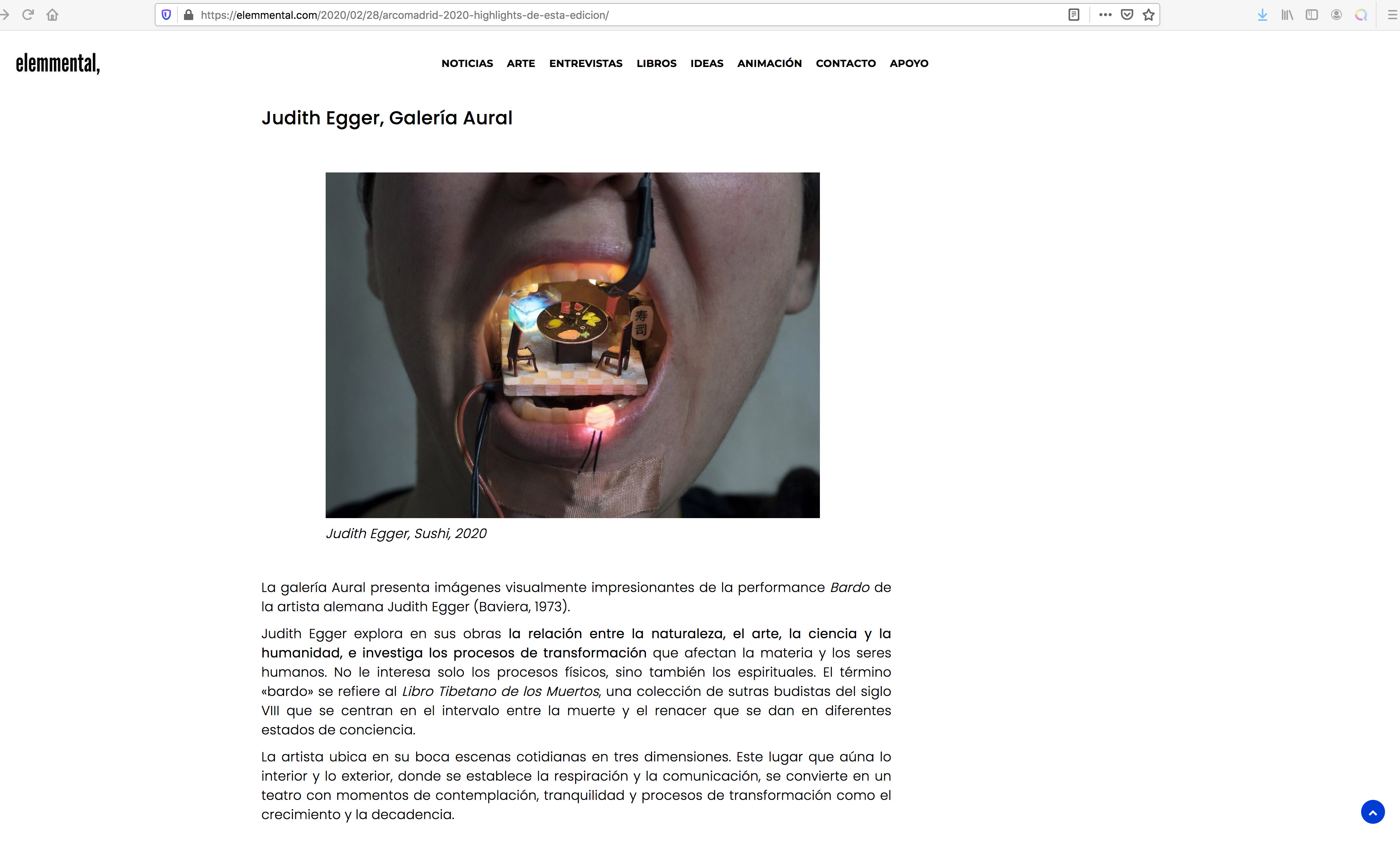
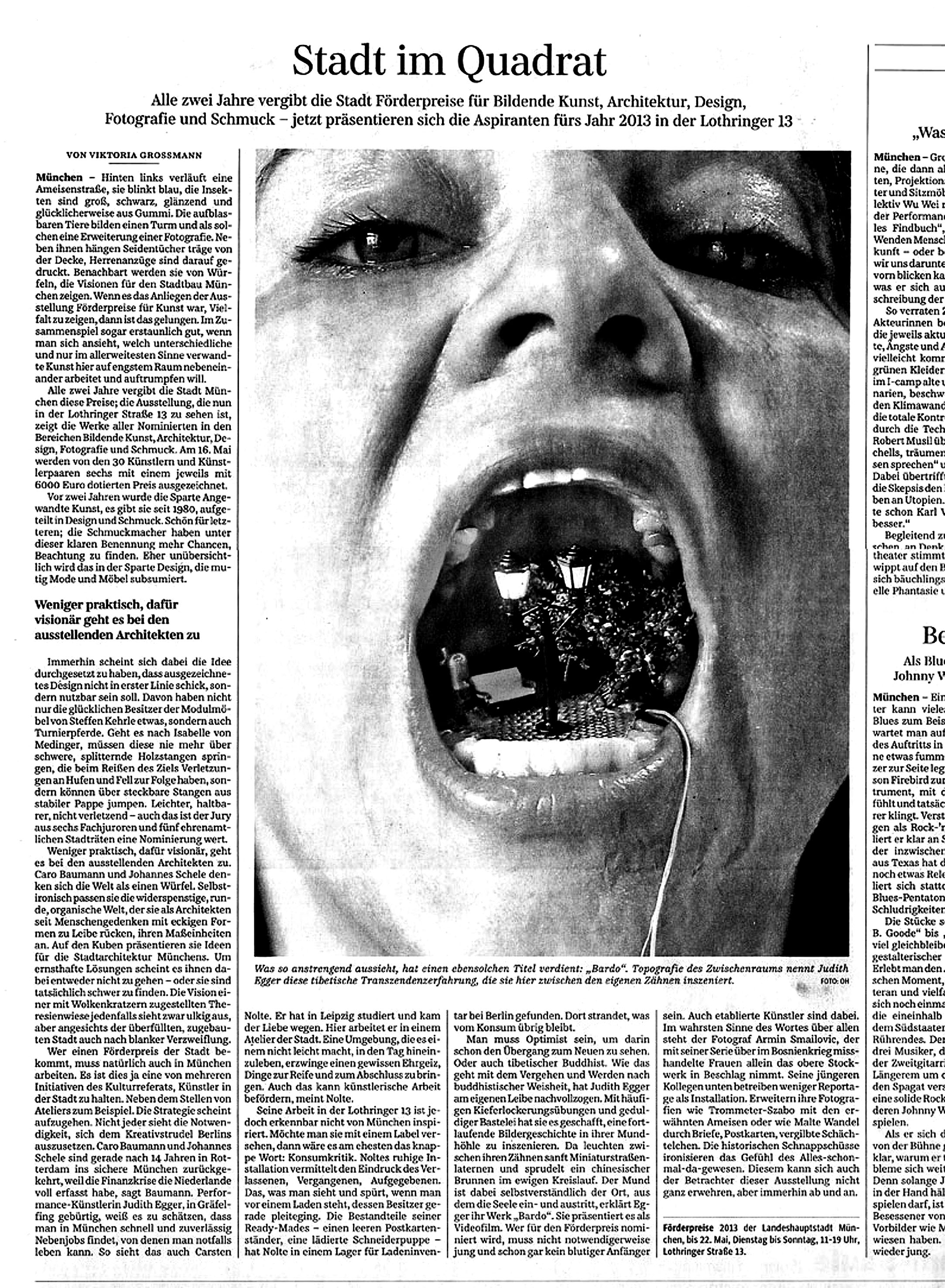
Mystical, enigmatic and visually stunning: this is how Judith Egger's performance ‘Bardo’ can be described, which revolves around states of liminality, of transitory transition. The term ‘Bardo’ refers to the Tibetan Book of the Dead (Bardo Thödol: ‘Liberation through Hearing in the Intermediate State’), a collection of Buddhist sutras from the 8th century. The text deals with the interval between death and rebirth, during which various states of being are attained. However, the accompanying ‘gaps’ or states of limbo are not limited to the time after death, but are an essential part of life itself. Judith Egger exhibits three-dimensional ‘miniature spaces’ in her own oral cavity – a sensitive place between the inside and outside, where not only breath and sound emerge from the body, but also communication arises. The open mouth becomes a stage, a showcase that reveals various scenes. Sounds from the artist's mouth are integrated into the sound. Although the miniature architectures placed in the oral cavity are deserted and appear rather static at first glance, the flickering of a television in the living room or the sushi conveyor belt in the restaurant, for example, suggest movement. Just as the foaming spray in a rock cave refuses to stand still, the bubbling water of a fountain seems to mimic the cycle of life. The artist uses different scenes to create moments of contemplation and silence, which at the same time anticipate upheaval and change. What happens beyond these spaces remains uncertain.
... moments of contemplation and silence, which at the same time anticipate upheaval and change. What happens beyond these spaces remains uncertain.


Judith Egger's performance ‘Bardo – Topography of the In-Between’ alludes to a term from the Tibetan Book of the Dead: Bardo refers to the state of limbo between life and death, hope and grief, inside and outside. For the artist, the oral cavity is a perfect place of transition. A passage for breath, food, words and sounds.


Press
Danielle Cruz
Danielle Cruz
link zum Artikel
Viktoria Grossmann
Viktoria Grossmann
Agnes Dabrowski
Agnes Dabrowski